
The Fellowship Program of the Network Science Society
Recognizes researchers who have made outstanding and significant contributions to network science research and to the community of network scientists. Elected nominees are named Fellows of the Network Science Society.
Criteria and Eligibility
The Fellowship will be awarded each year to up to 7 members of the community on the basis of their exceptional life-long individual contributions to any area of network science research and to the community of network scientists (locally and globally). All members of the community are eligible for nomination and election to the Fellowship. Selection from the pool of nominees will be conducted by the Fellowship Committee, to be appointed by the Network Science Society board and composed of a minimum of 4 prominent researchers active in the area of network science.
Award Ceremony
New Fellows will be honored at the banquet of the NetSci International School and Conference on Network Science of the corresponding year, where each Fellow will receive a personalized diploma with a citation. Attendance to the award ceremony is encouraged but not binding for fellowship election. Participation in the ceremony will be coordinated by the Network Science Society.
Nomination and Nomination Materials
Each nomination must be submitted by one guarantor, who will provide one single nomination letter co-signed by two additional sponsors. Self-candidatures will not be considered. Guarantors and sponsors are expected to be researchers active in the area of network science who are well-acquainted with the contributions of the nominee. For consideration, the guarantor is required to submit a nomination package consisting of the following:
- Nomination letter for the candidate signed by the guarantor and two co-sponsors, which should include a proposed citation of no more than 30 words.
- Curriculum vitae of the nominee, including full list of publications in the area of network science.
- List of 10 most significant research publications in the area of network science.
- Brief description of the nominee’s involvement with the network science community (both locally and globally).
All materials must be in English, and all the materials in the nomination package should be compiled into a single PDF file and submitted via the online form (link below). Separate recommendation letters and other items not listed above will not be considered. New nominations not selected in a given year will be automatically considered for one subsequent year.
Submission Process, Deadlines, and Decisions
Submission Process (updated): The Network Science Society is transitioning from email-based submissions to an online form system. Going forward, nominators should submit intent-to-nominate information and complete nomination packets using the appropriate online forms below.
Deadlines
- Submit the Intent to Nominate Form by February 1, 2026 (optional but strongly recommended)
- Submit the Nomination Packet Submission Form by March 1, 2026.
Nomination materials submitted by email to FellowshipNetSci@gmail.com on or before January 31, 2026 will also be reviewed. New nominations should be submitted using the online forms.
Decisions are expected to be communicated in April.
List of Fellows
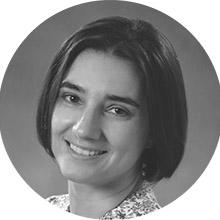
Réka Albert
2018
For her seminal contributions to the discovery of scale-free networks and the modeling of biological networks.
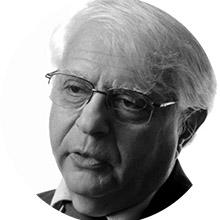
Mark Granovetter
2018
For foundational contributions to network science that changed the scientific understanding of economic behavior, social influence, and mobilization.

Yoshiki Kuramoto
2018
For outstanding contributions to the study of coupled oscillator networks, including pioneering work on the model now known as the Kuramoto model and the discovery of chimera states in network dynamics.
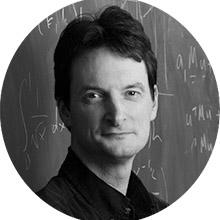
Mark E. J. Newman
2018
For foundational contributions to the mathematics of networks, including community structure, percolation processes, and the statistical underpinnings of random graph models and power-law distributions in real networks.

Brooke Foucault Welles
2018
For seminal work on small-world networks, chimera states, and synchronization phenomena in networks.
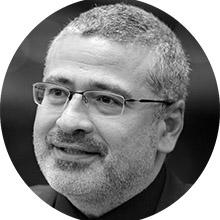
Alessandro Vespignani
2018
For seminal work on the statistical physics of complex networks and foundational contributions in network epidemiology, including the realistic modeling of large-scale outbreaks.

Duncan J. Watts
2018
For foundational theoretical and empirical work on small-world networks as well as search and influence in social networks.

Guido Caldarelli
2019
For major contributions to the assessment of distress propagation in financial systems and the understanding of quenched disorder and scaling in complex networks.

Raissa M. D’Souza
2019
For seminal contributions to the study of complex networks, including cascades in interdependent systems, abrupt transitions in network percolation, and control of network dynamics.

Stuart A. Kauffman
2019
For pioneering studies of the dynamical properties of random networks, especially the discovery of the critical dynamical regime in which flexibility and robustness spontaneously coexist.
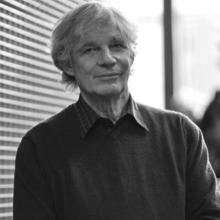
Jon M. Kleinberg
2019
For foundational contributions to the algorithmic perspective on network structure and dynamics, including hubs and authorities, small-world phenomena and search, information flows and cascades, and models of network formation.

José Fernando F. Mendes
2019
For profound contributions to network science that includes elucidating the consequences of preferential attachment, node aging, eigenvalue spectra, and critical phenomena in complex networks.

Anna Nagurney
2019
For sustained contributions to network science, including the formulation, analysis, and computation of solutions to engineered network systems, from congested urban transportation to supply chains, under varied decision-making behaviors.
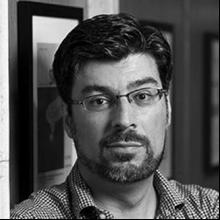
Luís A. Nunes Amaral
2019
For foundational contributions to the characterization of classes of networks, the empirical analysis of social networks, and the development of innovative computational methods to resolve the internal organization of biological networks.

Alex Arenas
2020
In recognition of his foundational research in network science — including in community detection, synchronization, and multilayer networks — and of his outstanding editorial and mentoring contributions.

Alain Barrat
2020
For many key and seminal contributions to complex network theory and to the understanding of their dynamics, including the most recent advancements to the theory of simplicial complexes in social contagions.

Ginestra Bianconi
2020
For foundational contributions to network science, in particular the formulation of the Bose-Einstein condensation in complex networks and advances on the structure and dynamics of multilayer networks.

Jennifer A. Dunne
2020
For pioneering work elucidating the network structure of ecology, particularly food webs, highlighting the interplay of dynamics and structure of networks.

Michelle Girvan
2020
For seminal contributions to the study of network structure and dynamics, including the internal organization of networks, stability of Boolean networks, and emergent patterns of collective network behavior.
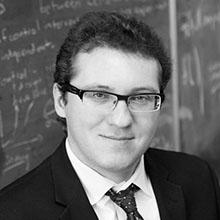
Adilson E. Motter
2020
For seminal contributions to the study of nonlinear dynamics on networks, including synchronization, cascading failures, synthetic rescues, control, symmetry phenomena, and applications to biological networks, metamaterials, microfluidics, and power grids.

Brian Uzzi
2020
For fundamental theoretical and methodological contributions in network science to study the achievements of humans as individuals and collectives in a wide variety of creative contexts.

Lada Adamic
2021
For seminal contributions to the theoretical and empirical analysis of online social networks, with applications to information diffusion and community structure.

Albert-László Barabási
2021
For innumerable contributions to the study of scale-free networks, models of growing networks, and interdisciplinary applications to network biology, social networks, and the structure of the Internet.
Peter Sherridan Dodds
2021
For foundational contributions to both the theoretical and experimental study of networks, and especially the growth, structure, and spread of information in social networks, both on- and offline.

Jürgen Kurths
2021
For his seminal contributions on network dynamics elucidating synchronization, basin stability, causality detection, and for pioneering network science applications to power grids and to the prediction of extreme events in climate.
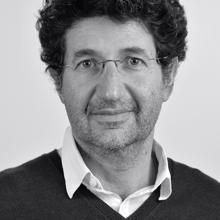
Vito Latora
2021
For seminal work on the structure and dynamics of temporal, multilayer, and higher-order networks, and innovative applications of network science to other disciplines, including neuroscience and urban design.

Marta Sales-Pardo
2021
For her contributions to understanding the large-scale organization of networks, and for the development of generative models and inference methodologies for complex networks.

Fan Chung
2022
For foundational contributions to the combinatorics of random graphs and networks.

Vittoria Colizza
2022
For her seminal contributions to network epidemiology, in particular elucidating the role of mobility and contact networks in the spreading of human and animal infectious diseases.

Noshir Contractor
2022
For foundational theoretical and empirical contributions to network science that address grand
societal challenges from global health to space travel.

Santo Fortunato
2022
For seminal work in network community structure leading to advances in multiresolution approaches and validation, and for contributions to disseminating network science.

Byungnam Kahng
2022
For seminal contributions to dynamics and phase transitions on complex networks and foundational contributions to community building in network science globally.
Yamir Moreno
2022
For significant contributions to statistical mechanics and nonlinear dynamics of network systems, including the modeling of spreading, game-theoretic, and synchronization processes.

Olaf Sporns
2022
For his founding role in network neuroscience and connectomics, and his pioneering studies of complex brain networks, including their structural organization, functional connectivity, dynamics, network communication, development and aging.

Nicholas Christakis
2023
For outstanding contributions to the study of social contagion of emotions, ideas, well-being, and behaviors, and implications for interventions designed to limit socially influenced obesity, smoking, and problematic drinking.

Aaron Clauset
2023
For significant contributions to network science, including community detection, algorithms to characterize the structure of networks and applications in the social and biological domains.
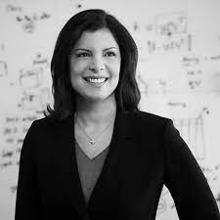
Tina Eliassi-Rad
2023
For her seminal work at the interface of network science, machine learning, and data mining, including role discovery in network data, principled measurement of tie-strength, and quantification of network similarity.

Ernesto Estrada
2023
For significant contributions to network science and its applications, including seminal works on geometric and spatial networks, chemical graph theory, as well as for his outstanding editorial work.

Marta González
2023
For her seminal contributions to our understanding of human mobility and transportation networks, and for applying network modeling to solve societal problems in urban systems.

Stanley Wasserman
2023
For seminal methodological contributions to the statistical modeling of social networks, and for his outstanding editorial and mentoring leadership.

Katy Börner
2024
For profound contributions to the understanding of how scientific disciplines and collaborative relationships emerge and evolve and the advancement of network data visualization, analysis, and literacy.

Albert Díaz-Guilera
2024
For seminal work on the analysis of network communities and dynamical consequences of structural complexity in synchronization phenomena.

Sergey Dorogovtsev
2024
For foundational contributions to the theory of evolving networks and the mathematical description of percolation and dynamical processes on networks.

Shlomo Havlin
2024
For seminal contributions to network theory, including the study of phase transitions, spreading phenomena, fractality, and interdependence in complex networks.

Petter Holme
2024
For foundational contributions to the analysis of temporal networks and a broad range of studies linking network structure to the dynamical behavior of emergent phenomena.

Cristopher Moore
2024
For foundational contributions to the algorithmic perspective on community detection and to the development of principled inference algorithms for uncovering the rich diversity of large-scale structures of real-world networks.

M. Ángeles Serrano
2024
For pioneering contributions to the geometric modeling of graphs and real-world networks, the development of the geometric renormalization group, and the application of these concepts across diverse disciplines.

Francesco Bullo
2025
For seminal contributions to the study of control and synchronization of network systems, including the role of network structure in multivehicle coordination and synchronization in power-grid networks.

Guanrong Chen
2025
For foundational contributions to pinning control, synchronization, and consensus in network dynamics, and for pivotal leadership in fostering the network science community in China.

Hawoong Jeong
2025
For foundational contributions to network science, including the discovery of scale-free networks in the context of the WWW and their applications to biological and technological systems.
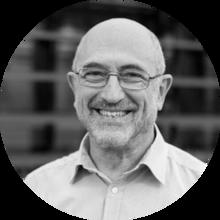
János Kertész
2025
For contributions to the fundamental understanding of the weighted structure and dynamics of complex networks and for pioneering work in economic networks.

Renaud Lambiotte
2025
For foundational contributions to network analysis and modeling, including community detection, the mathematics of random walks, and higher-order and multi-scale patterns in networks.

Philippa E. Pattison
2025
For leadership in developing, disseminating, and applying exponential random graph models to elucidate the multi-theoretical and multilevel emergence of network structures and dynamics.

Mason A. Porter
2025
For notable contributions to network analysis—including multilayer and polyadic networks, mesoscale structures, and varied applications—and dedicated mentorship of early-career researchers in network science.

Eckehard Schöll
2025
For seminal contributions to synchronization phenomena in complex networks, including full and cluster synchronization, chimera states, partial synchronization in the brain, synchronization control in power grids, and hierarchical patterns in adaptive networks.

Sara A. Solla
2025
For outstanding contributions to the statistical physics of neural networks, including learning in multilayer neural networks and emergent dynamics in recurrent neural networks.

Dani S. Bassett
2026
For fundamental contributions to network modeling of the human brain, illuminating its organization and dynamical changes spanning evolution, the lifespan, and neurological disorders.
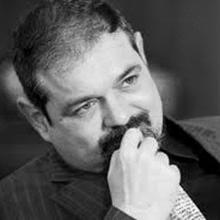
Stefano Boccaletti
2026
For pioneering contributions to nonlinear dynamical networks and their collective dynamics, including synchronization and control.

Tiziana Di Matteo
2026
For pioneering network-theoretic information-filtering methods and for cross-disciplinary applications of network science, particularly in finance and economics.

Lise Getoor
2026
For foundational contributions to statistical relational learning and scalable probabilistic reasoning over large networks, including collective classification, link prediction, and entity resolution.

Dmitri Krioukov
2026
For foundational contributions to network theory, including pioneering work on hyperbolic network geometry and its applications to network navigation and graph embedding.

Filippo Radicchi
2026
For major advances to the topics of community detection and network percolation, using both computational and analytical approaches.

Piet Van Mieghem
2026
For foundational contributions to epidemic spread on networks, graph spectra of complex networks, and network routing, that overarch theory and applications.