
Aim and Criteria
The Erdős–Rényi Prize is awarded each year to a selected young scientist (under 40 years old on the day of the nomination deadline) for their research achievements in the area of network science, broadly construed. While the achievements can be both theoretical and experimental, the prize is aimed at emphasizing outstanding contributions relevant to the interdisciplinary progress of network science.
Award and Ceremony
The Erdős–Rényi Prize will be awarded to a single scientist meeting the criteria above. The prize consists of a cash award in the amount of US $3,000, a personalized plaque and the honor of a lecture at the NetSci International School and Conference on Network Science, which is the annual flagship conference of the society. The prize awarding ceremony and lecture will take place in a special session at the Conference portion of the meeting. Attending the award ceremony is binding for the prize assignment (travel expenses to the award ceremony will be covered by the Network Science Society).
Nomination and nomination material
The awardee will be selected among the candidacies received by the deadline. Each candidacy must be submitted by one nominator, who should provide a short letter of motivation co-signed by two co-nominators. Self-candidatures will not be accepted. Nominators and co-nominators of a candidature can be:
- Directors and research leaders of national and international research centers
- University professors
- Partners and members of Scientific Academies
The nominator is required to submit the candidature dossier including the following:
- Letter of motivation signed by the nominator and co-nominators, which should include a proposed citation of no more than 30 words.
- Candidate’s curriculum vitae, including date of birth.
- List of scientific publications related to the candidate’s research activities in the area of network science.
All materials must be in English, and all the materials in the nomination package should be compiled into a single PDF file and submitted via the online form (link below). Separate recommendation letters and other items not listed above will not be considered.
Selection
The prize recipient will be selected by the Scientific Committee appointed by the Executive Committee of the Network Science Society and composed of a minimum of 4 prominent scientists active in the area of network science. Their name will be made public only after the official communication of the prize recipient.
Submission Process, Deadlines, and Decisions
Submission Process (updated): The Network Science Society is transitioning from email-based submissions to an online form system. Going forward, nominators should submit intent-to-nominate information and complete nomination packets using the appropriate online forms below.
Deadlines
- Submit the Intent to Nominate Form by February 1, 2026 (optional but strongly recommended)
- Submit the Nomination Packet Submission Form by March 1, 2026.
Nomination materials submitted by email to ErdosRenyiPrize@gmail.com on or before January 31, 2026 will also be reviewed. New nominations should be submitted using the online forms.
Decisions are expected to be communicated in April.
Past Awardees

Roger Guimera
2012
For outstanding work as a young researcher in Network Science for the technical depth and the interdisciplinary values of his scientific contributions to the analysis of network cartography and community identification.
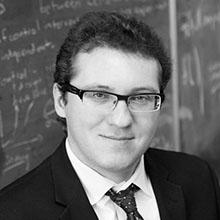
Adilson E. Motter
2013
For his groundbreaking contributions to the study of synchronization phenomena and the control of cascading failures in complex networks.
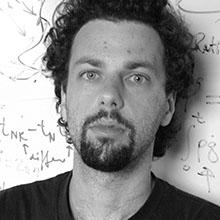
Mason A. Porter
2014
For his fundamental research on the mathematics of networks and his outreach efforts to teach network science to students in schools.

Chaoming Song
2015
As an outstanding young researcher in Network Science, for the breadth and depth of his influential work, ranging from network applications of self-similarity and renormalization group theory to the in-depth analysis of big data on human mobility.

Aaron Clauset
2016
For his contributions to the study of network structure, including Internet mapping, inference of missing links, and community structure, and for his provocative analyses of human conflicts and social stratification.

Vittoria Colizza
2017
For contributions to fundamental and data-driven network-based modeling of epidemic processes, including seminal studies on metapopulation systems, the impact of air transportation, and the predictability of epidemic outbreaks.

Dani S. Bassett
2018
For fundamental contributions to our understanding of the network architecture of the human brain, its evolution over learning and development, and its alteration in neurological disease.

Tiago P. Peixoto
2019
For groundbreaking contributions to the statistical analysis and visualization of networks, including efficient and principled inference algorithms based on the stochastic block model, and compression and prediction of richly annotated or hierarchical structures.

Sonia Kéfi
2020
For foundational and empirically grounded theoretical research that has advanced network science and its applications in ecology, with a focus on multiple types of interactions among species and the implications for global change, opening the path to new ways to study ecosystems.

Dashun Wang
2021
For foundational and empirically grounded theoretical research that has advanced network science and its applications in the field of computational social sciences, with a focus on the science of science and on developing methods related to quantifying and improving human achievement and standards-of-living.

Linyuan Lü
2022
For groundbreaking contributions to network information filtering, including seminal works on link prediction and detection of influential nodes in networked structures, and their technological applications.

Daniel B. Larremore
2023
For socially impactful contributions to network models of human-disease dynamics, with applications to malaria and the COVID-19 pandemic, and for foundational research in the theoretical and practical use of algorithms for community detection.

Antoine Allard
2024
For the breadth and depth of his contributions to modeling complex systems as networks, including the geometry of networks and the role of heterogeneity and superspreading in contemporary diseases and complex contagions.

Federico Battiston
2025
For seminal work on emergent collective behavior in higher-order networks and interdisciplinary applications of network science, in particular, to describe social phenomena.

Laurent Hébert-Dufresne
2026
For foundational contributions to the theory of contagion on complex networks, illuminating how network structure, higher-order interactions, and nonlinear transmission mechanisms shape the spread of diseases, behaviors, and ideas.